What Is a Mermaid Skirt, and How Do You Choose One?
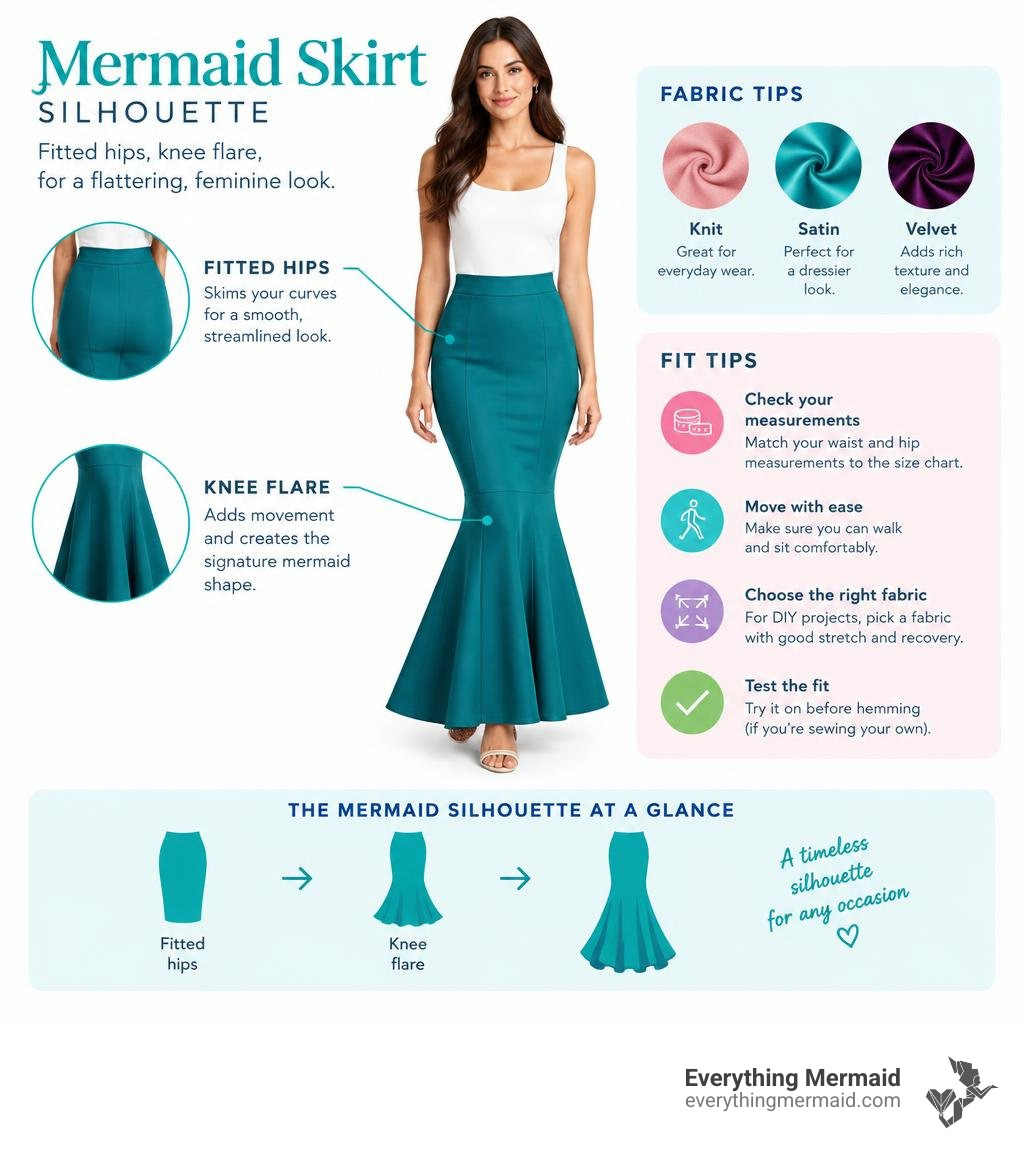
A mermaid skirt fits close through the hips and thighs, then flares near the knee. To choose one, start with the occasion: a soft knit works for everyday wear, while satin or velvet suits a dressier look. Check your waist and hip measurements against the size chart, then make sure you can walk and sit comfortably. If you’re sewing your own, choose a fabric with good stretch and recovery, and test the fit before hemming.
I’m Molly Nye, and I’ve covered mermaid-themed clothing and accessories at Everything Mermaid since 2016. I’ll help you sort through mermaid skirt styles, fit, and fabric choices without the guesswork.
Mermaid skirt helpful reading:
Understanding the Mermaid Silhouette vs Other Skirt Cuts
The defining characteristic of this iconic cut is its dynamic shift in volume. Unlike standard skirts that fall straight or gradually widen from the waistline, this cut hugs the natural contours of the waist, hips, and upper thighs before bursting outward into a dramatic flare around or just above the knee. This creates a balanced hourglass profile regardless of your natural body shape.
While pencil skirts maintain a tight, tapered line all the way to the hem, and A-line skirts gently expand from the hips downward, this silhouette offers the best of both worlds: sleek contouring on top and dynamic movement at the base.
| Feature | Mermaid Skirt | Pencil Skirt | A-Line Skirt |
|---|---|---|---|
| Waist Fit | Snug, contouring | Snug, contouring | Snug or relaxed |
| Hip & Thigh Fit | Form-fitting through thighs | Form-fitting to hem | Loose, flared from hips |
| Flare Point | At or slightly above the knee | No flare (straight/tapered) | Continuous flare from waist |
| Mobility | Free below knees, snug above | Restricted (requires slit) | Completely unrestricted |
| Best Occasions | Parties, formal, performance, chic casual | Professional, business formal | Casual everyday, daytime events |
Trumpet vs Fishtail Design Elements
In the fashion world, trumpet skirts and fishtail skirts are often used interchangeably with mermaid styles, but subtle construction differences set them apart:
- Trumpet Skirts: The flare begins higher up, typically around mid-thigh, resembling the bell of a brass trumpet. This provides a softer transition and greater stride freedom.
- Fishtail Skirts: The flare starts lower, closer to the knee or calf, and often incorporates an elongated back hem or train that mimics a fish’s tail.
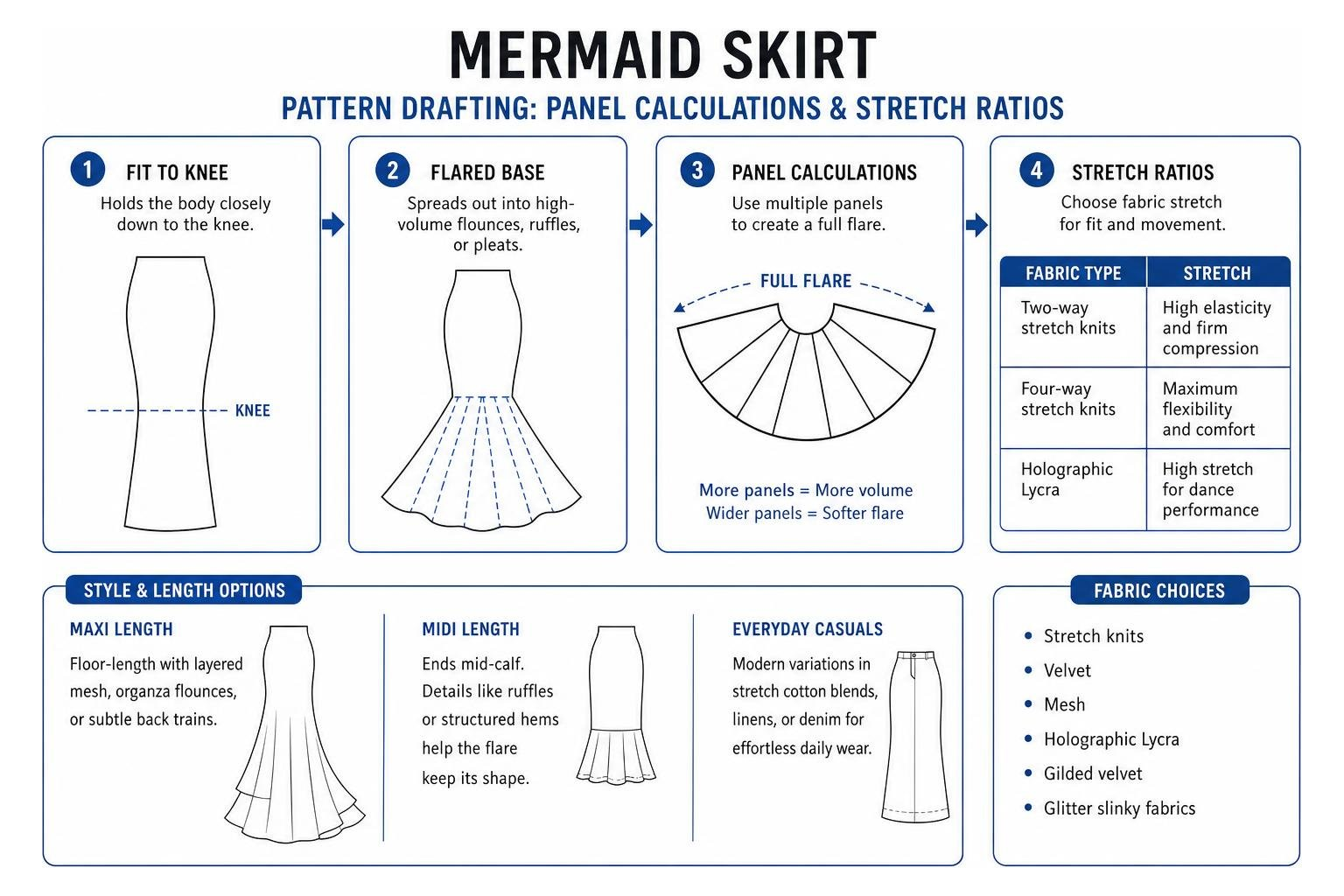
- True Mermaid Cuts: These hold the body closely down to the knee before spreading out into high-volume flounces, ruffles, or pleats.
Cultural and Performance Variations
This dramatic silhouette extends far beyond modern evening wear. In West African fashion, tailored wax prints bring vibrant structure to ceremonies—you can explore traditional styling in our African mermaid skirt style guide featuring bold Kitenge and Ankara motifs.
Meanwhile, in belly dance, cabaret, and ballroom costuming, dancers rely on panels cut from holographic Lycra, gilded velvet, or glitter slinky fabrics. The flared base accentuates hip work and footwork while allowing the performer to spin freely across the stage.
Popular Styles and Cuts of the Mermaid Skirt

From everyday streetwear to opulent red-carpet gowns, contemporary designers adapt this silhouette across diverse hem lengths and fabric treatments. When styling for sunny daytime gatherings or romantic evenings, exploring floral mermaid skirt outfit ideas can help you pair botanical prints with breezy seasonal tops.
High-Waisted Maxi and Midi Lengths
Length dramatically influences the skirt’s visual weight and formality:
- Floor-Length Maxi Skirts: Create an elongated, statuesque line. Often finished with layered mesh, organza flounces, or subtle back trains, these are staples for formal galas, proms, and evening events.
- Midi Lengths: Ending mid-calf, midi styles offer practical elegance for cocktail parties, business casual offices, and dinner dates. Look for details like lettuce-edge trims, asymmetrical ruffles, or structured hem facings that help the lower flare maintain its shape.
- Everyday Casuals: Modern variations in stretch cotton blends, lightweight linens, or classic denim reimagine the silhouette for effortless daily wear.
Convertible and Wrap Designs
Travel-friendly fashion has embraced convertible wrap cuts made from fluid modal or viscose blends. These versatile garments feature adjustable ties that can be wrapped around the waist as a cross-front skirt by day, then pulled over the torso to transform into a strapless, halter, or criss-cross neckline dress by night.
Choosing the Best Fabrics and Sizing for Fit
Selecting the right textile determines how comfortably your skirt hugs your curves and how crisply the lower hem flares outward. For tailored ready-to-wear pieces, inspecting high-end designer fabric choices provides great insight into how structured wools, satins, and crepon blends behave on the body.
Stretch Knits, Velvet, and Mesh
For DIY projects and active wear, two-way and four-way stretch knits are ideal:
- Nylon Ponte & Spandex: Offer high elasticity and firm compression, smoothing contours without losing shape.
- Brushed Velvet & Gilded Lycra: Provide a luminous sheen for dance performance and evening wear while accommodating full lower-body movement.
- Mesh & Power Netting: Often layered over opaque linings to create lightweight, tiered volume at the hem.
- The Opacity Test: Before buying, stretch the fabric firmly over your hand in bright light to verify that it remains completely opaque under tension.
Structured Woven Fabrics and Denim
If you prefer a tailored, architectural silhouette, structured woven fabrics like worsted cotton, twill, polyester satin, and denim offer great definition. Because woven fabrics lack natural give, they require precise sizing based on exact 3D body measurements rather than flat dimensions.
A piece like a red plaid mermaid midi skirt uses woven blends paired with smooth linings and secure zipper closures to preserve a crisp, flattering line. Similarly, designs such as a satin lace trim mermaid maxi skirt often blend smooth non-stretch satin bodies with elasticated hidden waist inserts to maximize both style and comfort.
Step-by-Step DIY Guide: Drafting and Sewing Your Own Skirt
Drafting your own custom-fit skirt pattern ensures a perfect fit tailored to your unique measurements. For supplementary visual layouts, you can review standard instructions for making a mermaid skirt pattern alongside our step-by-step drafting method below.
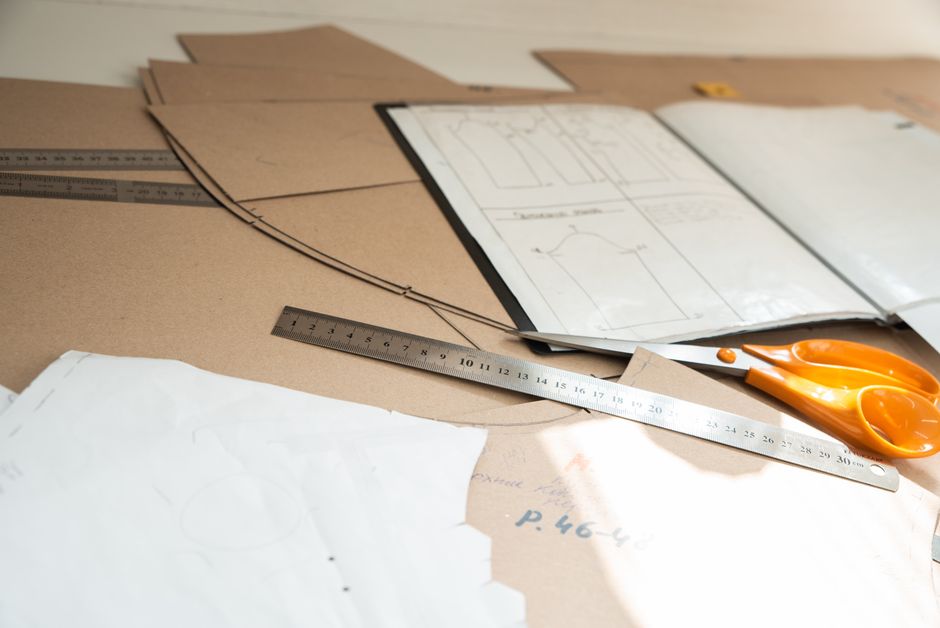
How to Draft a Custom Mermaid Skirt Pattern
A 5-panel construction using a symmetrical pattern piece folded in half provides the ideal balance between simple assembly and balanced flare distribution.
- Gather Supplies: Pattern paper (or butcher paper), measuring tape, ruler, pencil, paper scissors, and fabric weights.
- Take 7 Body Measurements (Measure along natural curves, not straight drops):
- Measurement 1: Waist / Belt line circumference (where the skirt band will sit)
- Measurement 2: Fullest hip circumference
- Measurement 3: Upper thigh circumference (around both legs together)
- Measurement 4: Vertical distance from belt line to fullest hip
- Measurement 5: Vertical distance from fullest hip to lower hip/thigh
- Measurement 6: Vertical distance from lower hip to 4 inches (10 cm) above the knee
- Measurement 7: Vertical distance from 4 inches above the knee down to the floor (plus 0.5 inches for hem allowance)
- Calculate Panel Widths (Stretch Divisor Formula):
- For stretch knits, divide circumference measurements by 1.2 to calculate negative ease.
- Divide the result by the number of panels (5).
- Divide by 2 (since the pattern paper is folded).
- Add 5/8 inch (1.5 cm) for side seam allowances.
- Formula: (Circumference ÷ 1.2 ÷ 5 ÷ 2) + 5/8 inch seam allowance
- Draft the Panel Outline:
- Fold your pattern paper in half lengthwise.
- Mark your vertical distance points downward along the folded edge.
- Draw horizontal width lines at each reference mark using your calculated panel measurements.
- Calculate the hem flare width by multiplying your calculated panel thigh width by 5.
- Draw a smooth flare line from 4 inches above the knee outward to the hem edge.
- Curve the bottom hemline upward slightly toward the outer seam to prevent drooping corners.
How to Sew a Mermaid Skirt with Stretch Fabric
- Cut the Panels: Lay your pre-washed fabric flat, ensuring the waistline runs parallel to the fabric’s crosswise stretch. Pin your paper pattern using fabric weights and cut out 5 identical panels.
- Pin Seams: Place panels right sides together, matching hip notches and knee flare markers carefully.
- Stitch with Stretch: Use a ballpoint or jersey needle on your sewing machine with a narrow zigzag stitch or stretch stitch (or use a 4-thread serger). Sew side seams using a 5/8-inch allowance.
- Attach Waistband: Fold a strip of matching stretch fabric over a 1-to-1.5-inch elastic band, pin to the waist opening right sides together, and stitch using a stretch seam.
- Hem the Flare: Finish the wide flared hem with a clean rolled hem, a narrow zigzag, or attach lightweight horsehair braid inside the hem allowance for extra architectural flounce.
How to Style and Care for Your Flared Skirt
Because this cut creates significant visual volume around your lower legs, balance is essential when assembling complete mermaid outfit ideas. Pair dramatic bottoms with clean tops and thoughtfully selected coastal mermaid jewelry to pull your look together.
Footwear and Top Pairing Guide
- Tops: Opt for fitted bodysuits, tucked-in silk blouses, or cropped silhouettes that finish near the waistband. This keeps your natural waist clearly defined and complements the flare below.
- Jackets & Outerwear: Choose cropped moto jackets or structured blazers that end at the upper hip. Avoid mid-thigh coats that cut across the fitted thigh section.
- Footwear: Pointed-toe heels, sleek ankle booties, and strappy block-heel sandals help lift the hem and elongate your stride. For casual midi skirts, low-profile clean white sneakers or flat mules offer a fresh, modern aesthetic.
Washing, Storing, and Fabric Maintenance
- Washing: Wash stretch knit and ponte garments on a delicate cycle in cold water using gentle detergent. For sequined, beaded, or metallic foil performance skirts, turn the garment inside out and hand wash inside a mesh garment bag.
- Drying: Always lay stretch skirts flat on a drying rack. Hanging heavy, wet knit skirts can stretch out the waist and distort the knee flare over time.
- Storage: Store structured satin and woven skirts on padded clip hangers. Fold heavy stretch velvet and knit maxi skirts over wide wooden hangers to prevent hanger marks and seam strain.
Frequently Asked Questions About Fit and Styling
What body types look best in a mermaid silhouette?
This silhouette flatters nearly every body type because it highlights waist-to-hip proportions while balancing the shoulders and lower legs. Hourglass figures highlight their natural lines, pear shapes balance hip curves against the wide flared hem, and athletic or rectangular frames gain the visual appearance of added curves. Petite wearers can choose high-waisted midi cuts paired with heels to lengthen their overall profile.
Can you comfortably walk and sit in a fitted flare skirt?
Yes, provided the skirt is properly constructed! The key to comfortable mobility is ensuring the flare transition begins at least 2 to 4 inches above the actual kneecap. If the flare starts below the knee or is cut from rigid fabric without a back slit or generous stretch, walking and sitting can feel restrictive. Knits with spandex provide the easiest everyday movement.
How much fabric is needed to make a floor-length fishtail skirt?
For an adult floor-length skirt (approximately 40 to 44 inches from waist to floor), plan to purchase fabric equal to three times the total desired skirt length, plus an additional 6 to 12 inches for waistbands and seam allowances. For most standard 54-to-60-inch wide fabrics, this equates to roughly 3.5 to 4 yards (approximately 3.2 to 3.7 meters) of material to accommodate all five wide-flared hem panels.
Conclusion
Whether you prefer casual streetwear denim, elegant evening satin, or dazzling performance stretch velvet, this timeless silhouette continues to captivate wardrobes worldwide with its unmatched blend of structured contouring and fluid movement.
Ready to add this show-stopping silhouette to your wardrobe or find your next favorite ocean-inspired piece? Explore the full collection of mermaid skirt options and expert guides at Everything Mermaid today!