What It Takes to Become a Professional Mermaid
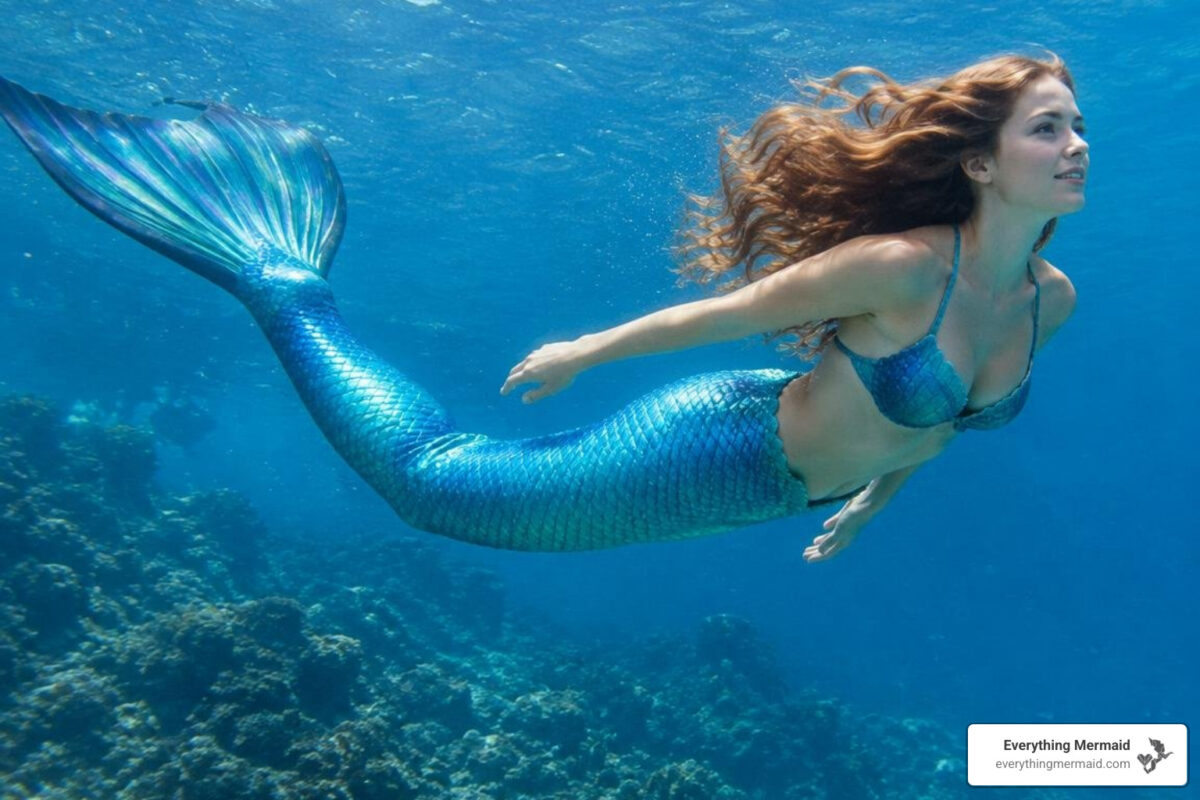
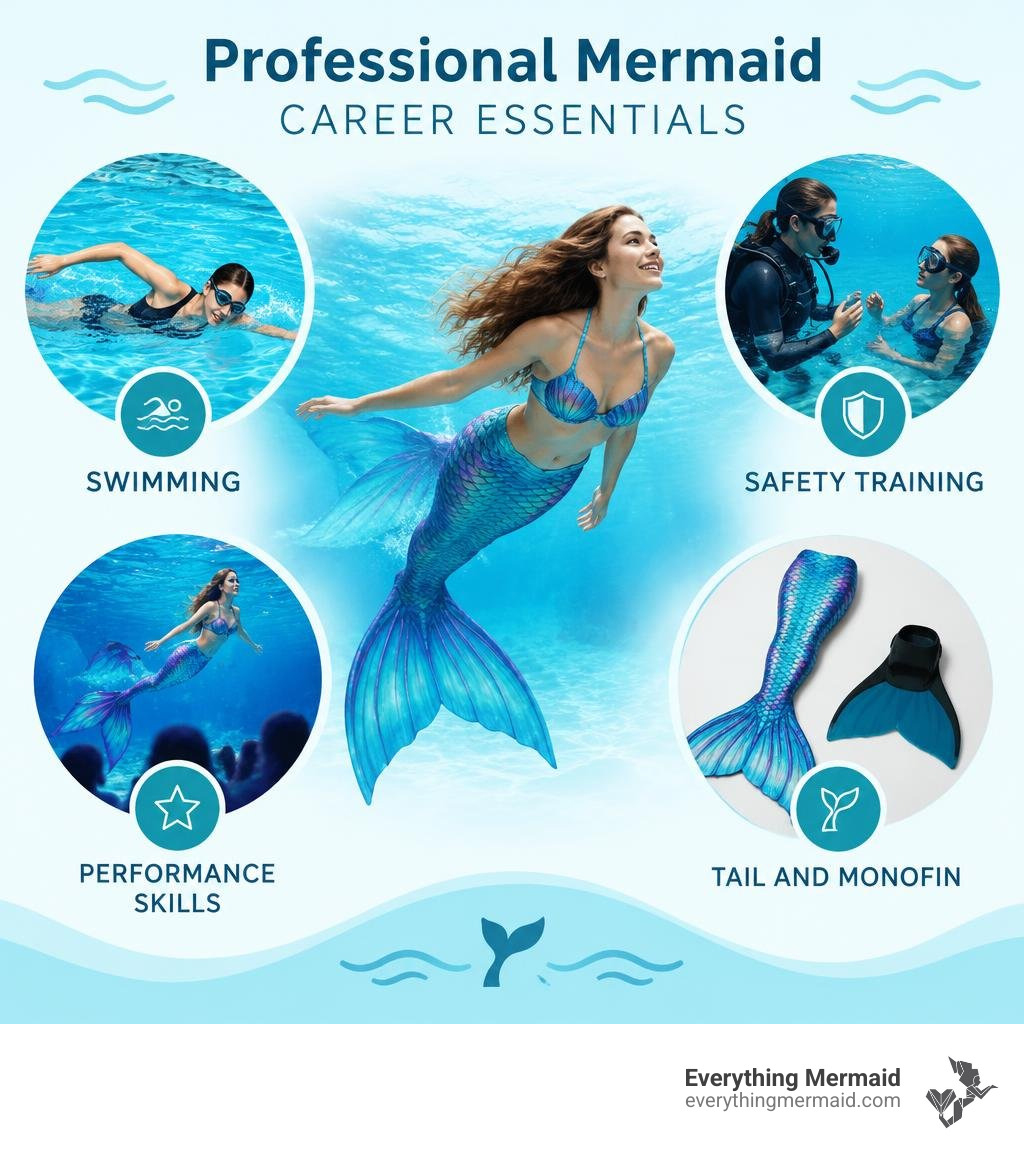
A professional mermaid is a paid performer who swims or appears in a mermaid tail at parties, aquariums, resorts, and other events. To pursue the work, build strong swimming skills, learn to use a tail and monofin safely, and get supervised training before taking on underwater performances. Acting, guest interaction, and a reliable safety plan matter as much as the costume.
Your gear should fit the work you want to do. A poolside appearance and an underwater show place different demands on a tail and monofin.
I’m Molly Nye, owner and writer of Everything Mermaid, where I’ve covered mermaid gear since 2016. My product research and e-commerce experience guide this look at professional mermaid gear.
The Evolution of the Professional Mermaid Industry
The art of aquatic performance traces back through synchronized swimming pioneers like Annette Kellerman and Esther Williams, but the specialized field of mermaiding found its iconic modern foundation at Florida’s Weeki Wachee Springs in 1947. As seen in the historical Weeki Wachee mermaid documentary, early performers breathed through submerged air hoses to perform intricate underwater ballets in natural freshwater springs.
Around 2004, independent freelance performers began combining professional freediving with custom tail fabrication, transforming mermaiding into a global entertainment sector. Today, elite performers secure residencies in massive public aquariums, feature in luxury hospitality campaigns, and execute high-stakes live productions. Some performers have even conquered deep-seated water phobias to build remarkable careers; as highlighted in a Business Insider feature on tank performances with marine life, dedicated artists train to swim comfortably alongside sharks and stingrays in 25-foot aquatic exhibits while captivating millions of viewers online.
Ocean Conservation and Environmental Ambassadorship
Beyond theatrics, modern performers frequently act as ocean ambassadors. By leveraging their mythical personas, merfolk engage audiences on critical marine conservation issues such as ocean plastics, reef restoration, and anti-finning campaigns. Trailblazers like Mermaid Kat have combined professional scuba instruction and freediving to create global platforms for marine protection, demonstrating how performance art can drive tangible eco-activism.
Educational outreach extends from interactive aquarium exhibits to community beach cleanups and children’s literature. In a Bristol Live interview on licensed mermaid experiences, performers emphasize that helping children fall in love with aquatic life is one of the most enduring rewards of the job. Merging environmental science with live storytelling transforms an ordinary appearance into a meaningful educational event.
Performance Venues and Event Types
Working performers operate across a broad spectrum of venues, each demanding tailored equipment and specialized skills:
- Private Birthday Parties and Celebrations: In-water pool games, storytelling, and poolside photo sessions for intimate gatherings.
- Aquarium Exhibits and Marine Parks: Large-scale choreographed shows in mixed-species tanks, often requiring safety divers and rigorous tank protocols.
- Corporate Galas and Brand Activations: Ambient atmospheric modeling, red-carpet welcomes, and synchronized water entertainment for product launches.
- Luxury Resorts and Hotels: Interactive poolside cabana experiences, guest greeting programs, and guided snorkeling encounters.
- Media Productions and Commercials: Underwater modeling for film, television, and fashion campaigns, requiring refined breath control and specific underwater modeling tips to maintain effortless facial expressions without masks.
Required Training, Certifications, and Aquatic Safety

Mermaiding is a demanding athletic discipline combining synchronized swimming, freediving, and water safety. Before strapping into a monofin, aspiring performers must master the undulatory dolphin kick, maintaining propulsion from the core and hips rather than the knees. Learning how to properly swim like a mermaid requires comprehensive aquatic comfort, efficient static apnea (breath-holding at rest), dynamic apnea (breath-holding while swimming), and reliable equalizing techniques for the ears and sinuses.
Essential Qualifications for a Professional Mermaid
A credible professional profile requires formal certifications from recognized aquatic training agencies. Today, organizations like SSI and PADI offer structured educational pathways:
- Mermaid and Ocean Mermaid Certifications: Foundational courses teach tail swimming mechanics, dynamic apnea, and open-water safety. SSI allows entry-level mermaid training starting at age 12, with instructor certifications available at age 18.
- Advanced Freediving Credentials: Training through AIDA, PADI, or SSI provides the physiological knowledge necessary to extend bottom time and prevent shallow-water blackouts.
- Water Rescue and First Aid: Credentials such as Lifeguard Certification, CPR/AED, and Rescue Diver ensure a performer can handle real-world aquatic emergencies.
- Specialty Instruction: Completing advanced courses through the top international mermaid classes equips performers with professional-level choreography, water safety supervision, and business administration skills.
Industry veterans like Mermaid Linden, a PADI Master Scuba Diver with more than 800 logged dives and a static breath-hold exceeding five minutes, illustrate the level of dedication that defines top-tier aquatic professionals.
Managing Physical Risks and Environmental Hazards
Underwater performers face unique occupational hazards that require strict safety protocols:
- Thermal Regulation: Extended immersion in water below 20°C (68°F) quickly drains body heat, leading to hypothermia. Performers manage core temperatures with insulated neoprene undergarments, heated rinse showers, and limited set times.
- Barotrauma and Sinus Care: Frequent depth changes and chlorinated environments can cause ear and sinus infections. Regular ear-drying solutions, sterile saline rinses, and proper equalizing techniques protect delicate tissues.
- Eye and Skin Irritation: Performing without goggles or a mask exposes eyes to pool chemicals and marine bacteria. Saline eye flushes and hypoallergenic barrier balms reduce irritation.
- Exhibit Hazards: In large aquarium habitats, performers must understand animal behavior, monitor biological filtration currents, and coordinate closely with dedicated safety divers stationed just outside the camera frame.
Professional Tail Materials and Monofin Selection
Choosing the correct tail requires balancing realism, weight, durability, and cost.
| Feature / Metric | Fabric (Spandex/Lycra) | Neoprene | Platinum-Cure Silicone |
|---|---|---|---|
| Average Weight | 2–5 lbs | 8–15 lbs | 25–60 lbs |
| Price Range | $100 – $400 | $300 – $900 | $1,000 – $5,000+ |
| Buoyancy | Neutral to slightly positive | Slightly positive | Neutrally buoyant in water |
| Durability | Moderate (prone to scuffs) | High (resistant to tears) | Extremely high (heavy-duty) |
| Realism | Basic printed graphics | Textured, dimensional | Hyper-realistic 3D scales |
| Primary Use Case | Entry-level, dry parties, travel | Daily pool shows, teaching | Film, aquariums, luxury galas |
Understanding the material science behind silicone mermaid tails is crucial. High-end professional tails exclusively use skin-safe, platinum-cure silicone. Cheaper tin-cure silicones and latex compounds can leach chemicals, cause skin rashes, and degrade rapidly in chlorinated or salted water. Furthermore, public aquariums strictly prohibit tin-cure materials due to chemical toxicity that can harm marine life.
Silicone vs. Neoprene Tail Construction
For full-time performers, silicone represents the standard in visual realism. Custom-poured silicone tails mimic the density and fluid movement of true aquatic creatures. Because silicone is nearly neutrally buoyant, its substantial out-of-water weight (often 30 to 50 pounds) glides weightlessly underwater. However, handling and transporting these tails on dry land requires assistance and physical conditioning, as described in a Metro News profile on professional mermaiding, where performers note that maneuvering a 40-pound tail on land is a workout in itself.
Neoprene tails provide an exceptional balance for high-volume commercial pool work. Built from the same material used in cold-water wetsuits, neoprene tails offer robust thermal insulation, dry relatively quickly, and resist pool-deck abrasions far better than thin spandex.
Selecting the Ideal Monofin for Propulsion
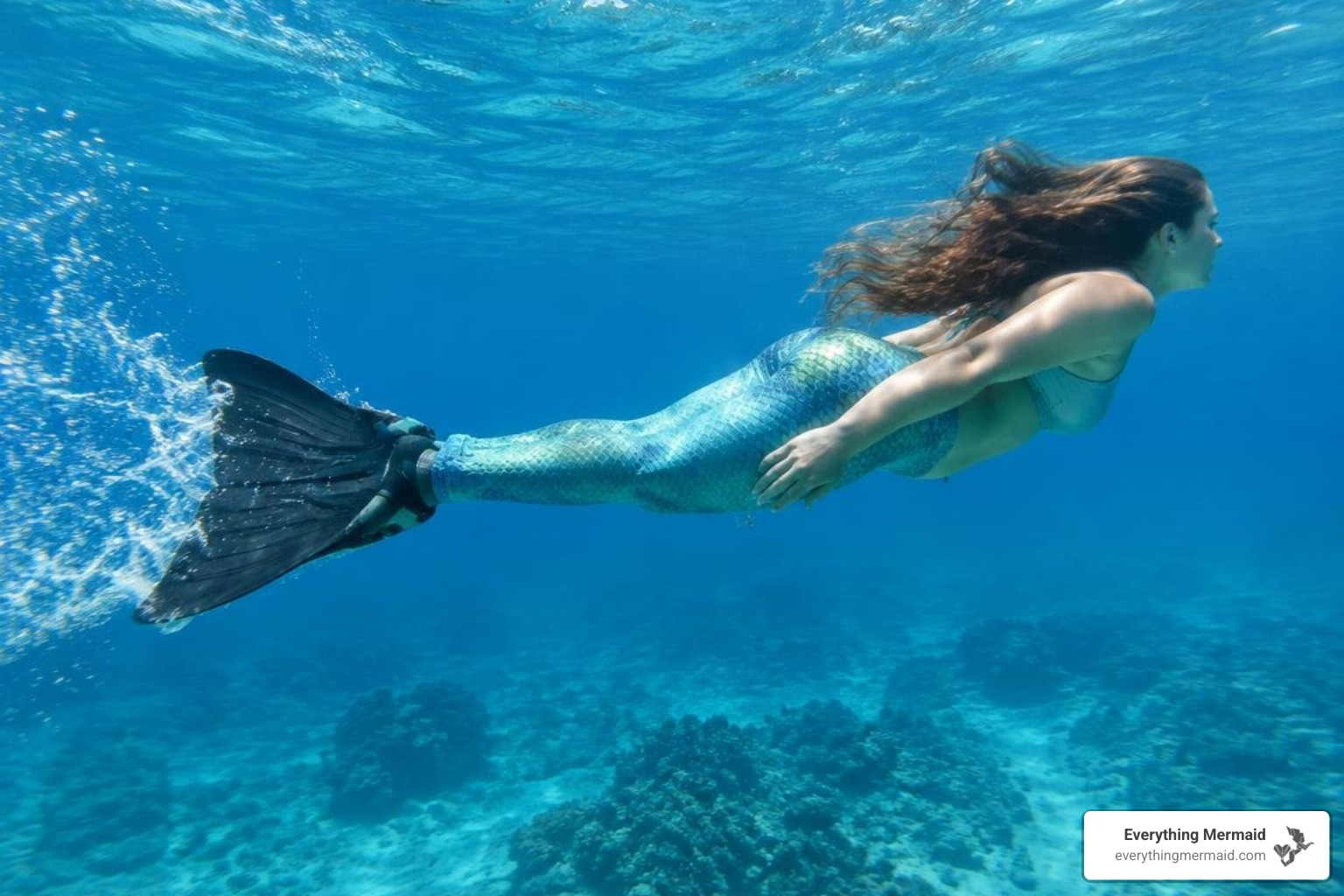
The monofin is the functional engine inside every tail. While the silicone or fabric skin provides aesthetics, the monofin dictates speed, agility, and energy efficiency.
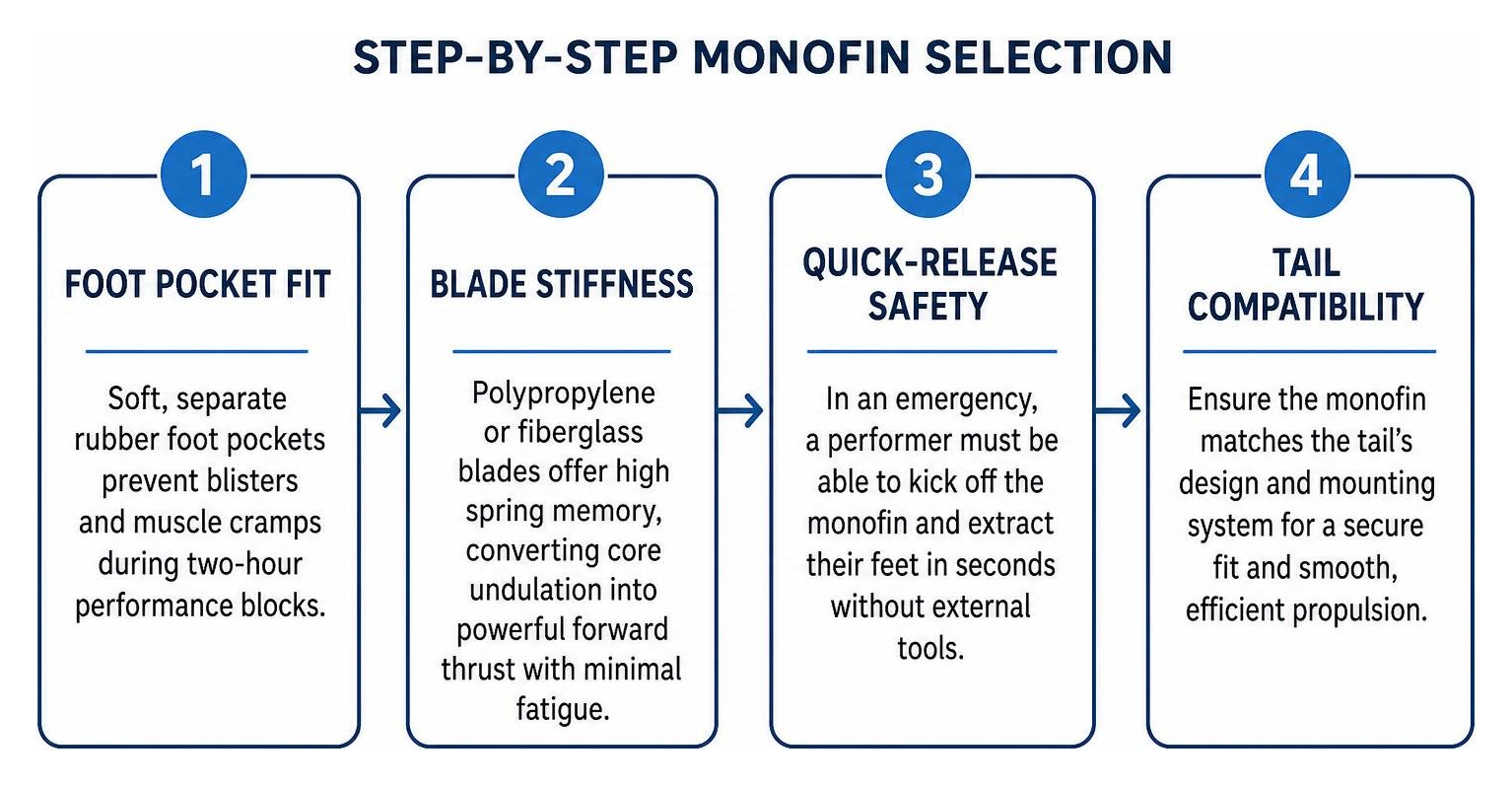
When selecting a professional monofin, prioritize the following elements:
- Foot Pocket Ergonomics: Soft, separate rubber foot pockets prevent blisters and muscle cramps during two-hour performance blocks.
- Blade Stiffness and Material: Polypropylene or fiberglass blades offer high spring memory, converting core undulation into powerful forward thrust with minimal fatigue.
- Quick-Release Safety: In an emergency, a performer must be able to kick off the monofin and extract their feet in seconds without external tools.
Business Operations, Earnings, and Performance Bookings
Mermaiding operates at the intersection of freelance performance art and small business management. Standard hourly rates for solo mermaid entertainment average $250 per hour, with flexible booking options spanning 1, 1.5, 2 hours, or full-day appearances. More complex productions, such as choreographed synchronized swimming team packages, generally command between $4,000 and $8,000 depending on the cast size and technical scope.
To protect their enterprise, performers must carry specialized aquatic liability insurance. Professional agencies and independent venues typically require a Certificate of Insurance (COI) naming them as an additional insured before permitting tail performances in their pools. Structured mermaid classes also serve as an effective supplementary revenue stream for certified instructors seeking year-round income outside seasonal event spikes.
Rates, Packages, and Corporate Events
Successful performers structure their pricing packages around event logistics, physical demands, and audience size:
- Children’s Parties: Recommended at 5 to 10 children per performer to ensure safe, high-quality interaction. Packages include poolside games, ocean trivia, and photo sessions.
- Dry Meet-and-Greets: Ideal for venues without pool access or during colder seasons. Performers use decorative clam shell seating or custom backdrops for photo-centric appearances.
- Corporate & Resort Residencies: Multi-week contracts with aquariums, luxury hotels, or cruise ships, typically booked 6 to 8 weeks in advance. Standard private bookings require at least 4 weeks’ notice.
Marketing Yourself as a Professional Mermaid
Building a viable business requires consistent digital branding and professional marketing assets:
- High-Resolution Portfolio: Invest in professional underwater photography that highlights tail movement, breath control, and expressive posing.
- Video Performance Reels: Create polished dynamic video clips demonstrating underwater acrobatics, bubble-ring blowing, and engaging crowd interactions.
- Character Development: Establish an identifiable persona, signature costumes, and curated storylines tailored to your primary target market.
- Client Management: Streamline bookings with clear cancellation policies (such as full refunds for cancellations 7+ days out, rescheduling fees within 48 hours to 7 days, and non-refundable deposits under 48 hours).
Frequently Asked Questions About Mermaiding
How much does a professional mermaid earn per hour?
Solo mermaid entertainment averages $250 per hour for standard private and corporate events. Day rates for film productions, multi-day aquarium contracts, or luxury resort residencies can range from $1,000 to over $2,500 per day plus travel expenses.
What tail material is best for professional performances?
Platinum-cure silicone is the gold standard for visual realism, film productions, and public aquarium shows due to its lifelike appearance and neutral buoyancy. For high-volume children’s parties and daily pool lessons, high-grade neoprene offers the best combination of durability, thermal comfort, and lower weight.
What certifications are required to work as a mermaid?
Most professional venues require proof of CPR/First Aid, Lifeguard training, and certified Mermaid or Freediver credentials from agencies like SSI or PADI. Tank performers working in multi-species habitats often hold Master Scuba Diver or Rescue Diver ratings.
Conclusion
A successful career as a professional mermaid blends athletic conditioning, rigorous water safety, and authentic performance art. From mastering dynamic apnea to investing in high-grade platinum-cure silicone tails and responsive monofins, professional merfolk build careers founded on skill, dedication, and environmental stewardship.
Whether you are designing a custom persona or upgrading your performance equipment, explore our comprehensive guide to premium mermaid tails to find professional reviews, safety specifications, and curated gear tailored to your aquatic journey.